Top choice for a Galapagos Family Hotel

John Garate • July 23, 2026

Start With Space, Not Just Bed Count


A Galapagos trip can be the kind of family story everyone retells for years: the sea lion that swam beside your child, the blue-footed booby that stopped dinner conversation cold, the first giant tortoise spotted in the wild. But between ferries, early excursions, sandy shoes, and hungry travelers, where you stay shapes how those memories feel. The right Galapagos family hotel gives everyone room to recover, eat well, and wake up ready for the next adventure.


Start With Space, Not Just Bed Count

A room that technically sleeps four is not always a comfortable choice for a family of four. After a full day in the sun, children need room to play or wind down, and adults need a little breathing space of their own. For multigenerational trips or friends traveling together, that need becomes even more practical.

Look beyond the number of beds. A one- or two-bedroom suite can offer privacy for parents, a separate sleep space for children, and a common area where the group can gather without everyone sitting on luggage. Larger parties may be better served by a multi-bedroom suite or villa, where shared meals and relaxed mornings feel natural rather than crowded.

It also helps to ask about the details that affect real sleep: air conditioning, window coverings, bathroom arrangements, and whether living spaces are separate from sleeping areas. These are small questions before arrival and meaningful comforts once your family is on island time.

A Kitchen Changes the Rhythm of a Family Trip

Galapagos days often begin early. Boats and guided outings run on schedules, while young children and hungry teenagers tend to run on their own. A full kitchen gives families choices that a standard hotel room cannot.

You can prepare a simple breakfast before an excursion, keep cold water and snacks ready after the beach, or make an easy dinner when everyone is too tired for a restaurant. It is also useful for dietary preferences, picky eaters, and travelers who want to balance special meals out with quieter evenings at home.

Freshwater dispensers, basic household supplies, and laundry-friendly amenities matter more than they may seem. They reduce the little errands that can eat into a short stay, especially after wet swims, dusty trails, or a ferry crossing. A comfortable family base should make daily life easier, not add another set of logistics to manage.

Choose a Location That Supports Independent Island Time

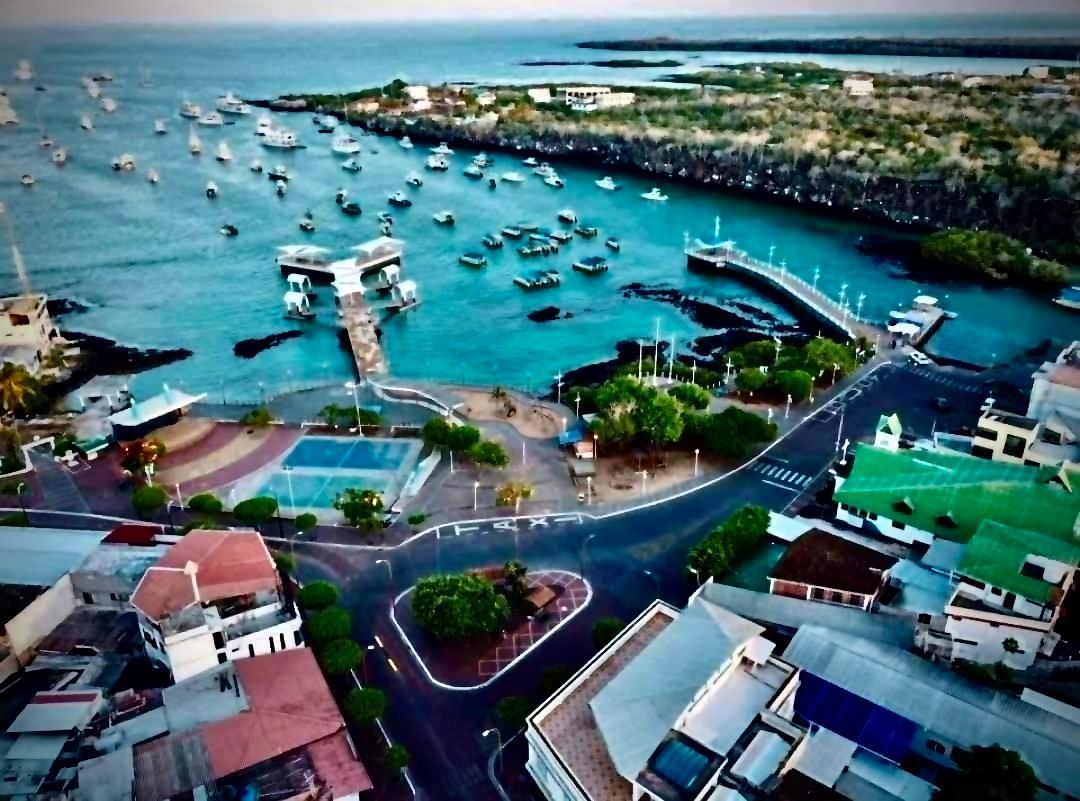
For families staying on Santa Cruz, Puerto Ayora offers access to restaurants, shops, the waterfront, and departure points for many day trips. A well-located home base means you can build a flexible itinerary: a morning excursion, a slow lunch, an afternoon rest, then a walk out for ice cream or dinner.

That flexibility is one reason land-based travel works so well for many families. Cruises can be a wonderful fit for travelers who prefer a fixed itinerary and life at sea. But a land stay lets you choose your pace, return to your own space between activities, and decide when a quieter day is the right call.

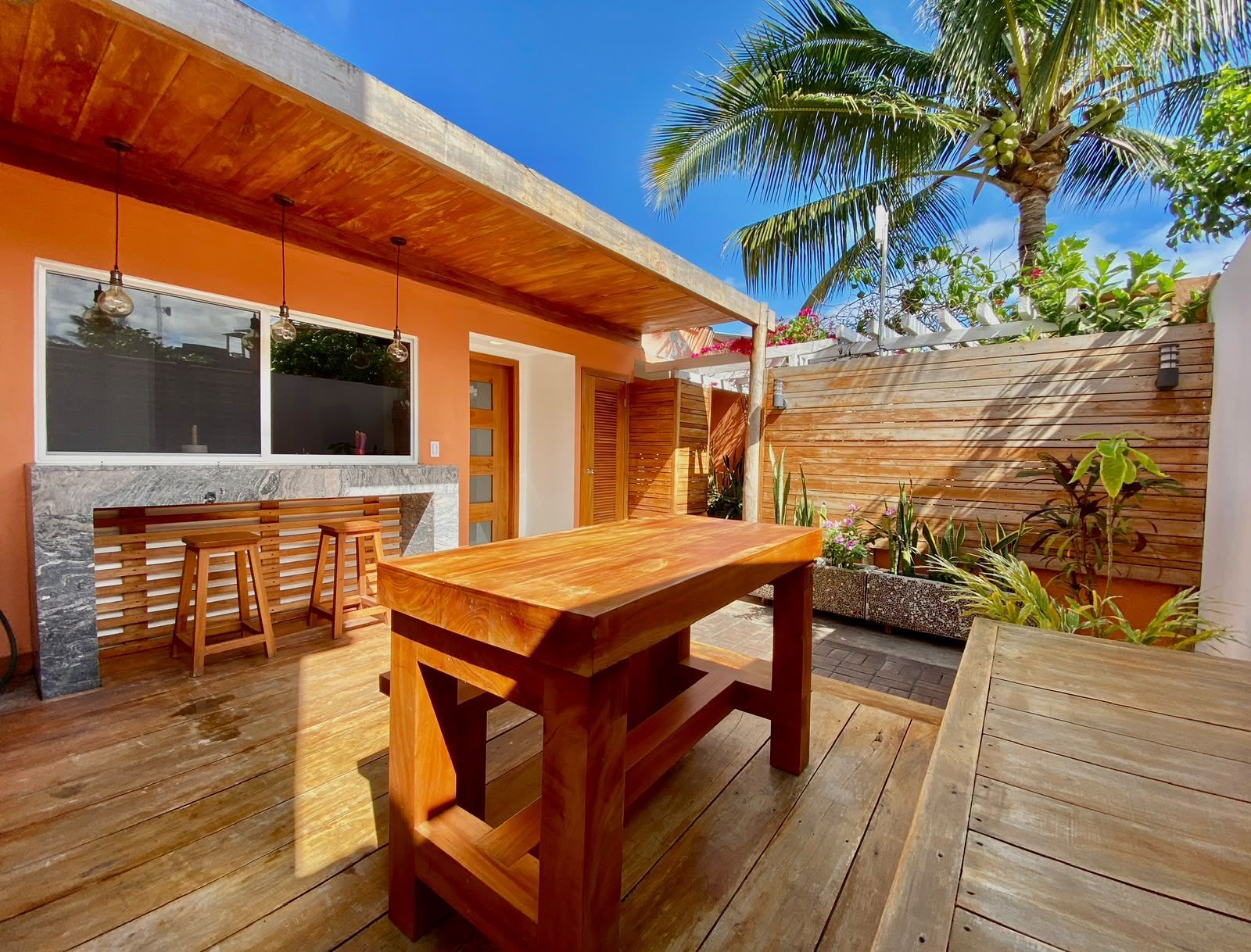
A central location does not have to mean a large, impersonal property. Many families prefer an intimate setting where they can come back to a peaceful courtyard, balcony, or suite that feels distinctly connected to the island.

Look for Local Help Before You Need It

The Galapagos is extraordinary, but getting between islands, arranging transfers, and selecting activities can feel complicated for first-time visitors. The best family hotel experience includes people who are happy to help you make sense of it all.

Ask whether the property can assist with airport transfers, ferry tickets, pre-arrival grocery shopping, and recommendations suited to your group. A family with a toddler, for example, may need a different outing than a group traveling with active teens or grandparents. Honest local guidance can help you avoid packing too much into one day and point you toward experiences that match your energy level.

At Torre Mar Galapagos Boutique Suites, that kind of personal support is part of the stay. The goal is not to hand you a generic list, but to help your family feel cared for as you find your own way through the islands.

Comfort Should Still Feel Like the Galapagos

Family-friendly does not need to mean generic. The most memorable stays pair practical comforts with a sense of place: island-inspired furnishings, thoughtful details, and hosts who can share what makes their community special. Cleanliness, reliable WiFi, beach towels, and easy check-in are essential, but warmth is what makes a suite feel like a place to belong.

Before booking, consider what your family truly needs at the end of an adventure-filled day. If the answer is space, a kitchen, help with the details, and a welcoming place to regroup, choose a stay that lets you come back as guests and leave with the feeling that you have made friends.

ocean view social terrace
By John Garate July 22, 2026
Puerto Ayora ocean view hotel suites offer room to settle in, cook, recharge, and plan Santa Cruz days with a local host's caring guidance nearby each day.
Galapagos Hotel Suite with a kitchen
By John Garate July 21, 2026
Choose a Galapagos hotel with kitchen space for easy meals, family routines, and flexible days between Santa Cruz adventures and sea days at your pace.
Kitchen in a suite atTorre Mar Galapagos Boutique Suites
By John Garate July 21, 2026
Choose Puerto Ayora suites with kitchen space for easy breakfasts, family meals, and a comfortable, independent home base on Santa Cruz Island year-round.
Bright living room with sofa, coffee table, dining set, blue curtains, and tiled floor
By John Garate July 19, 2026
Find Puerto Ayora family accommodation with room to rest, cook, and plan island days, plus caring local support for every generation for island travel.
TouringGalapagos
By John Garate July 19, 2026
Plan Galapagos land based tours with room to roam, local insight, and comfortable island stays that make wildlife, beaches, and family time easier for all.
Hotel in Puerto Ayora, Santa Cruz Island, Galapagos
By John Garate July 19, 2026
Compare Puerto Ayora hotels with confidence: find the right location, space, kitchen access, and local support for a relaxed Galapagos stay on Santa Cruz Island.
View of Santa Cruz Galapagos
By Donna Daugherty July 18, 2026
Compare Santa Cruz Island hotels for a more comfortable Galapagos stay, with room to rest, cook, plan, and explore Puerto Ayora at your own daily pace.
Galapagos hotel interior
By John Garate July 17, 2026
Choose Galapagos accommodation with space, local guidance, and the freedom to explore Santa Cruz at your own pace, then return somewhere warmly welcoming.
Galapagos Sea Lions on a Galapagos
By John Garate July 17, 2026
Wondering what to pack for Galapagos? Use this practical, island-tested checklist for sun, trails, boat days, ferries, and relaxed evenings for your trip.
A pink and black lizard is crawling on the ground.
June 30, 2025
The Mystery of the Pink Iguanas The Galapagos Islands are known around the world for the unique flora and fauna that are found in this isolated archipelago. These volcanic islands are located at the convergence of four oceanic currents. These extraordinary conditions have created an environment that hosts multiple climate zones and conditions that became a cradle of development for many distinctive animal species. Known as a living laboratory, the Galapagos Islands are home to endemic animal species found nowhere else on earth. One of the most recent species to be discovered in the Galapagos Islands is the Galapagos Pink Land Iguana (Conolophus marthae). The Pink Land Iguanas were first spotted by Galapagos National Park wardens in 1986. In 2009, it was determined these elusive Pink Land Iguanas are a separate species from all other land iguanas. What is known about the Galapagos Pink Land Iguanas: Why are these iguanas pink? These iguanas are pink with black spots and stripes. The reason they appear pink is due to the lack of pigment in the skin that appears to be pink. The circulating blood under their skin gives the iguanas their pink color. Are Pink Land Iguanas a new species? When the Pink Land Iguana was first spotted in 1986 it was thought to be just an oddity. After genetic studies were done, it was revealed that the genetic divergence for the Pink Land Iguanas happened 5.7 million years ago. This makes the Pink Land Iguanas one of the oldest endemic Galapagos species. Are they like other land iguanas? The Pink Land Iguanas have a similar physical structure to Galapagos Land Iguanas. The short head and strong back legs with sharp claws are characteristic of Galapagos land iguanas. What do they eat? In the limited observations made, they appear to be primarily herbivores. They have been seen eating the pads and fruit from prickly pear. Where do Galapagos Pink Land Iguanas live? The only location they have been observed is in an area that is 25 sq km on the slopes of the Wolf Volcano in northern Isabela. The nests & borrows have not yet been found. How many Pink Land Iguanas are there? A census was conducted and approximately 200 individuals were counted. From this census, a good estimation would be a population of about 300. What needs to be discovered: There are many things not known about the Galapagos Pink Land Iguana. It is important that research is done to find out more important information to ensure the species thrives. Here are some important questions that need to be answered. Are introduced species threatening the survival of the Galapagos Pink Land Iguana? Rats and other introduced species can disrupt barrows and nests of the Pink Land Iguanas. This can be mean viable eggs are eaten or disturbed and are no longer viable. It isn’t know all the potential threats rats and feral animals are creating for the Pink Land Iguanas. These can be cause serious threats. What do Pink Iguana hatchlings look like? It isn’t known yet. No juveniles have been observed. Is there a viable breeding population? It isn’t known yet. More observation is needed. Are the neighboring Land Iguanas encroaching on the Pink Land Iguana’s territory and threatening their survival? The two species may coexist or one could be encroaching on the territory of the other creating a threat of survival. Where do they nest? It isn’t known yet. In the challenging terrain, no nests have been discovered. Why haven’t juveniles been spotted? Not spotting juveniles could indicate there are serious threats to successful reproduction or they just have not been found. Successful reproduction is a key factor in the survival of the species. Are there other threats to the Galapagos Pink Land Iguana? A volcanic eruption is another threat to the survival of the Pink Land Iguana. The more that is learned about the behavior the more successful an emergency plan would be if there was an eruption.  How you can help There are so many questions that need to be answered to protect this newly discovered species to ensure their survival. Much more information needs to be gathered. How can more be learned? A consistent observation plan needs to be carried out. The area where the Pink Iguanas live is uninhabited rough terrain on the Wolf volcano. With current technology, part of the observation is being done using video cameras placed in the Pink Land Iguana’s territory. In conjunction with regularly scheduled fieldwork, in this remote and challenging location, to make additional observations to support this important fact-finding mission. From the data gathered, fact-based conservation plans can be created and implemented. The first step is gathering the data. If you would like to support this important project to conserve the Galapagos Pink Land Iguana you can make a donation to the Galapagos Conservancy . Quality conservation programs are vital to the Galapagos wildlife. At Torre Mar Galapagos Boutique Suites , we support science-based conservation programs like this. Support this important work of the Galapagos National Park wildlife management and be part of the team that solves the mystery of the Pink Iguanas. #galapagos #galapagosislands #pinkiguanas #galapagosconservancy #wildlifeconservation